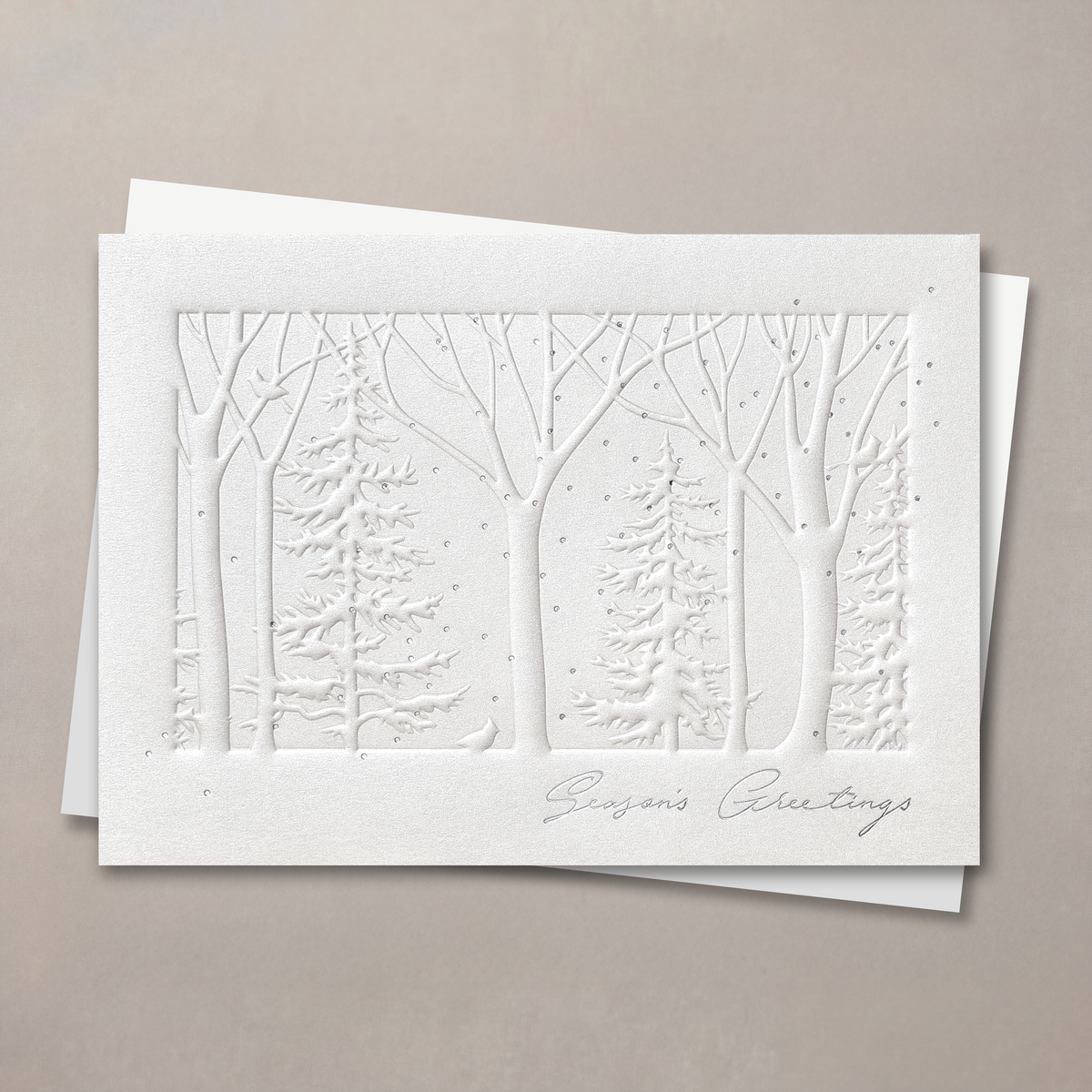
Few traditions capture the spirit of the holidays quite like sending and receiving Christmas cards. Today, they’re a familiar part of the season - colorful envelopes arriving in the mail, filled with messages of cheer, photos of family, and warm wishes for the year ahead.
But this beloved custom has a surprisingly rich history that stretches back nearly two centuries, evolving alongside changes in art, printing, and the way we connect with one another.
The First Christmas Card
The very first known Christmas card was commissioned in England in 1843 by Sir Henry Cole - the same year Charles Dickens published A Christmas Carol. Cole, a British civil servant and founder of the Victoria and Albert Museum, wanted an easier way to send holiday greetings to his wide social circle.
He turned to his friend, artist John Callcott Horsley, who designed an image of a family celebrating together with the words “A Merry Christmas and a Happy New Year to You.” About a thousand copies were printed and sold for a shilling each - a small fortune at the time, but a big success nonetheless.
How Printing Made Cards Popular
As printing technology improved throughout the 19th century, Christmas cards became more affordable and widely available. Color lithography made it possible to produce beautiful, detailed designs in large quantities.
By the 1870s, sending Christmas cards had become a full-fledged holiday tradition in Britain and was quickly spreading across Europe and North America. Early cards often featured scenes of nature, winter landscapes, or Victorian domestic life rather than the religious or Santa-themed imagery common today.
Christmas Cards Come to America
By the late 1800s, Christmas cards had crossed the Atlantic and taken root in the United States. German immigrant Louis Prang, often called the “father of the American Christmas card,” began printing cards in Boston in the 1870s.
His designs, richly detailed and often embossed with gold, set a new standard for quality. Prang’s cards were works of art in themselves, and they helped transform the Christmas card from a novelty into a cherished keepsake.
Evolution Through the 20th Century
As the 20th century unfolded, Christmas cards continued to evolve with the times. The rise of photography led to the introduction of photo cards, allowing families to share images of themselves alongside their holiday greetings.
During wartime, cards often carried patriotic themes or messages of hope. By the 1950s and 60s, cards reflected mid-century design trends - bright colors, bold typography, and playful illustrations - while the tradition itself remained a steadfast part of holiday culture.
Modern Christmas Cards
Today, Christmas cards come in every style imaginable - elegant, humorous, minimalist, or custom-designed to reflect personal stories.
Many people still cherish the act of sending and receiving them as a way to slow down and reconnect during a busy season. In an increasingly digital world, a physical card feels intentional and heartfelt, a small but meaningful act that keeps the tradition alive.
Why the Tradition Endures
The enduring appeal of Christmas cards lies in their simplicity. They’re a way to pause, reflect, and share goodwill - a tangible reminder of connection and kindness.
Each card, whether sent across the street or across the world, carries the same timeless message: you matter to me. That’s the same spirit Sir Henry Cole hoped to capture in 1843, and it continues to resonate nearly two centuries later.